
Table of Contents
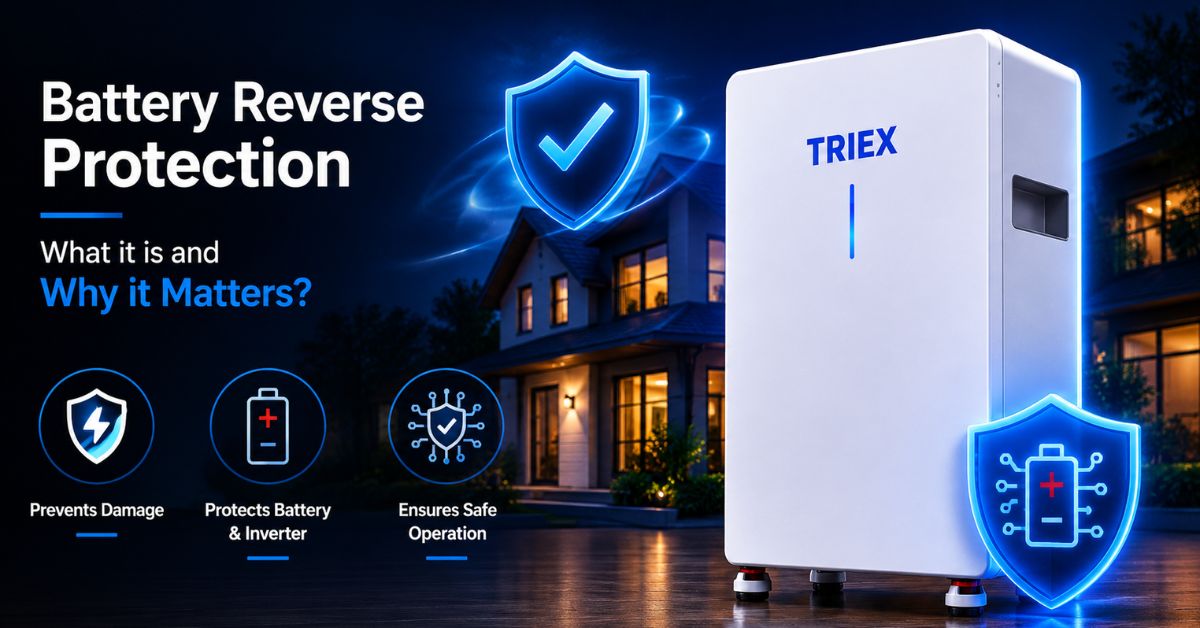
Quick Answer: Battery reverse protection is a safety circuit inside a hybrid inverter that detects when the battery is connected with the wrong polarity and blocks current before it damages the internal components. Without it, a simple wiring mistake can permanently destroy an inverter worth hundreds of thousands of rupees.
In Pakistani homes, one of the easiest and most expensive installation mistakes is connecting the battery to the inverter with positive and negative terminals swapped. This article explains what battery reverse protection is, what happens when it is absent, and how to avoid polarity mistakes during installation. If you are new to solar systems, it also helps to understand how a hybrid solar inverter works before learning advanced installation safety topics.
What Battery Reverse Protection Actually Is
Every battery has two terminals. Positive and negative. Your hybrid inverter also has two battery connection points. Positive and negative. They must match.
Battery reverse protection is a circuit inside the inverter that monitors which direction current is flowing when the battery is first connected. If the battery is connected backwards, meaning positive to negative and negative to positive, this circuit either blocks all current flow or blows an internal fuse before any serious damage can reach the main electronics.
Without this protection, the full current of the battery flows through the inverter’s internal components in the wrong direction the moment the cables are connected.
What Happens When Battery Polarity Is Wrong
If an inverter has weak or no reverse protection and the battery is connected incorrectly, the damage happens in seconds.
A large surge of current forces its way through the inverter’s DC bus and sensitive components in reverse. Internal components including diodes, MOSFETs, and control ICs are not designed to handle reverse current. They burn out almost instantly.
In most cases the inverter shows no display, no startup beep, and no communication with the battery, even though the battery itself is fully charged and undamaged. From the outside the inverter looks fine. Internally the driver circuits and DC bus are permanently destroyed.
On the battery side, if cells are forced into reverse charging, the affected cells can overheat or be permanently damaged.
We have seen this happen multiple times in installations across Karachi and Lahore. The inverter arrives on site, gets connected, and never turns on. The cause in every case was a polarity mistake during cable connection.
Why This Is a Particular Risk in Pakistan
Pakistan’s solar installation market has grown very quickly. Many systems are installed by electricians who have learned on the job without structured solar safety training. On a hot rooftop in Karachi at 40 degrees Celsius, with multiple cables to connect simultaneously, a polarity mistake is easy to make.
IEC 62109, the international safety standard for power converters used in photovoltaic systems, requires inverter designs to include protection against foreseeable installation errors. Battery reverse protection is part of that safety layer.
An inverter with robust reverse protection either blocks the wrong connection entirely or blows a cheap replaceable fuse instead of destroying the main board. An inverter without it transfers the full cost of the mistake to the most expensive component in the system.
Important Disclosure for Triex IP66 Series
The Triex IP66 Hybrid Inverters (6kW and 8kW outdoor series) do not include built-in battery reverse protection. These outdoor rated systems are designed for harsh Pakistani weather conditions and are commonly compared with indoor inverter models during system planning. You can read the complete guide on hybrid solar inverters in Pakistan to understand outdoor vs indoor inverter selection, battery compatibility, and installation planning. This is stated clearly so that installers and homeowners can take the necessary precautions before connecting the battery.
For IP66 installations, the installer must verify correct polarity using a multimeter before making any battery connection. This single step eliminates all risk of reverse polarity damage.
Practical Installation Steps to Prevent Polarity Mistakes
These steps apply to every hybrid inverter installation regardless of brand or model.
Step 1: Label everything before connecting anything. Use red tape or a marker on the positive terminal of both the inverter and the battery. Use black on the negative. Do this before any cables are run. This takes 30 seconds and prevents the most common mistake.
Step 2: Verify with a multimeter before tightening. Place the red probe on the inverter positive battery terminal and the black probe on the inverter negative terminal. Connect the other ends loosely to the battery without tightening. Check the multimeter reading. A positive reading confirms correct polarity. A negative reading means the cables are swapped. Disconnect and swap before proceeding.
Step 3: Connect battery last. Complete all AC output wiring and solar panel connections first. Connect the battery only after everything else is done and double-checked. This reduces the number of steps happening simultaneously and lowers the chance of rushing through the battery connection.
Step 4: Power on and verify communication before connecting the home. Turn the inverter on and confirm it shows correct battery voltage and state of charge on the display or app. Only after this is confirmed should you connect the inverter output to the home distribution board.
Frequently Asked Questions
Does battery reverse protection mean I never have to check polarity?
No. Even with reverse protection, always check polarity before connecting. The protection is a last line of defense, not a substitute for correct installation practice.
Can a reversed battery damage the battery itself?
Yes, in some configurations. If cells in a multi-battery string are forced into reverse charging, those cells can overheat and suffer permanent capacity loss or physical damage.
How do I know if my inverter has battery reverse protection?
Check the inverter's technical specification sheet under protection features. It should explicitly state reverse polarity protection or reverse battery protection. If it is not listed, assume it is not present and take extra precautions during installation. This feature is usually listed in the inverter specifications section alongside protection ratings, switching time, and battery compatibility details.
What does it cost to repair an inverter damaged by reverse polarity?
In most cases the damage to driver circuits and the DC bus is not repairable at a reasonable cost. The inverter is effectively written off and requires full replacement. This makes a 30-second polarity check the most cost-effective step in any installation.
Is reverse polarity damage covered by warranty?
No. Every inverter manufacturer considers reverse polarity connection to be an installation error. Warranty terms universally exclude damage caused by incorrect wiring. Always verify polarity before connecting.