
Table of Contents
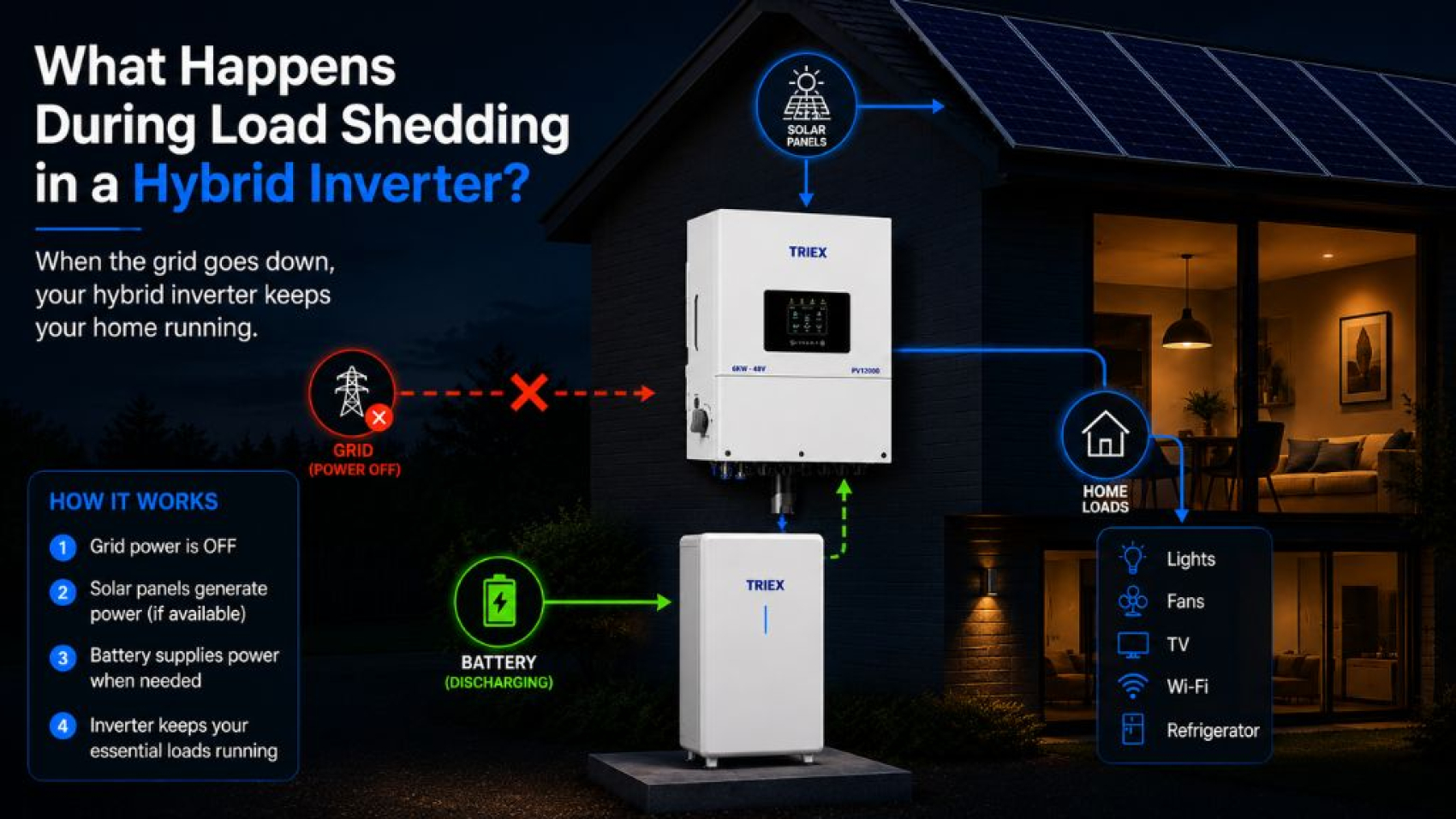
Quick Answer: A 5kVA hybrid inverter can run fans, lights, a refrigerator, TV, router, and in many cases one inverter AC, but only if the battery bank, solar input, and appliance startup surge are properly matched. In Karachi, Lahore, and other Pakistani cities where load shedding and voltage fluctuation are common, the practical limit depends less on the inverter label and more on total running load, startup surge, cable sizing, and battery health.
If you are planning a hybrid solar system in Pakistan and wondering whether a 5kVA inverter is enough for your home, the honest answer depends on what you want to run and how you manage the load. This article breaks it down with real wattage figures and practical field experience
Understanding What 5kVA Actually Means
5kVA is the apparent power rating of the inverter. In real-world use, the actual usable watt output depends on the power factor of your appliances. For most home appliances, you can treat 5kVA as approximately 4,000 to 4,500 watts of usable capacity under normal conditions.
That number changes when motor appliances like air conditioners, refrigerators, and water pumps start. These appliances draw 2 to 3 times their running watt figure at the moment of startup. This startup surge lasts only a few seconds, but it is the most important number to plan around.
Why Startup Surge Matters More Than Running Load
Two homes with identical appliances can have completely different experiences with the same 5kVA inverter. The difference is almost always startup surge and how many motor appliances start at the same time.
An inverter that is running fine at 2,000W can trip instantly if a 1-ton AC and a refrigerator both start together, because their combined startup surge can hit 3,500 to 4,000W in that moment.
Exact Wattage Reference for Pakistani Home Appliances
Use this table to calculate your actual load before buying any inverter.
Appliance | Running Wattage | Startup Surge |
Ceiling fan | 75W | 150W |
LED bulb (10W) | 10W | No surge |
Wi-Fi router | 15W | No surge |
Television 43 inch | 100W | No surge |
Laptop | 65W | No surge |
Refrigerator (medium) | 150W | 400 to 600W |
1-ton inverter AC | 900W | 1,800 to 2,200W |
1.5-ton inverter AC | 1,350W | 2,700 to 3,000W |
Water pump 0.5HP | 370W | 700 to 900W |
Iron | 1,000W | No surge |
Microwave | 1,200W | No surge |
Electric kettle | 1,500W | No surge |
Washing machine | 500W | 800 to 1,200W |
Real Load Calculation Example
A typical Karachi family evening load:
- ● 4 ceiling fans: 300W running, 600W startup
- ● 8 LED lights: 80W, no surge
- ● 1 refrigerator: 150W running, 500W startup
- ● 1 television: 100W, no surge
- ● 1 Wi-Fi router: 15W, no surge
- ● 1 inverter AC 1-ton: 900W running, 2,200W startup
Total running load: 1,545W Peak startup surge if AC and fridge start together: approximately 3,700W
This is well within the 5kVA range but leaves limited headroom. Adding an iron or water pump on top of this load would push the system toward overload.
Core Household Loads
Fans, Lights, and Internet
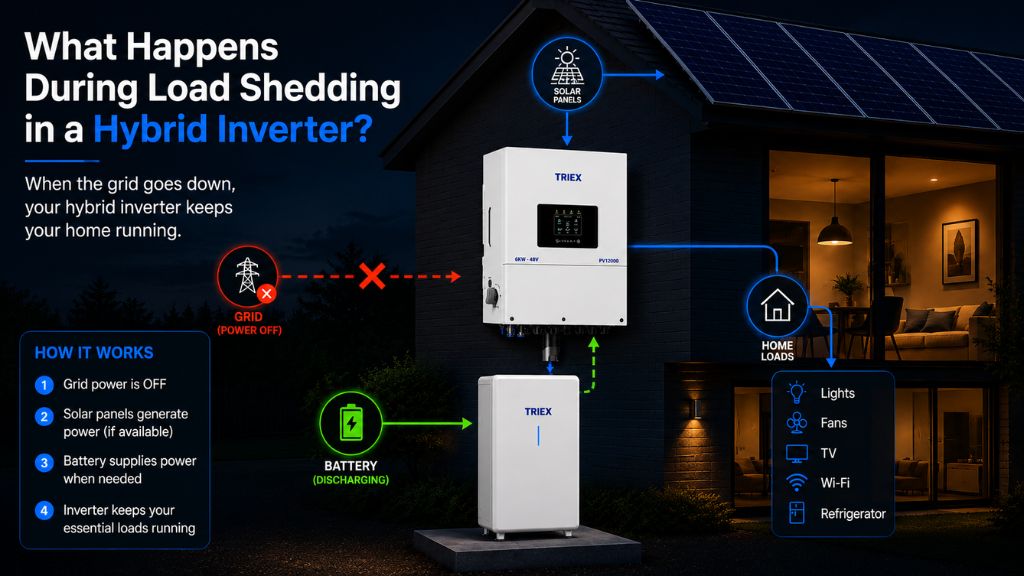
For most homes, a 5kVA hybrid inverter handles the basic evening load comfortably. Ceiling fans, LED lights, a Wi-Fi router, and phone charging are all normal loads for this inverter class. This combination creates no significant startup surge and keeps the inverter running in a very stable zone.
Refrigerator and Television
A refrigerator and television fit well into the standard 5kVA use case. The fridge compressor is the main appliance to watch because it creates a short startup spike every time the thermostat triggers it. If the battery voltage is low or the system switches between grid and backup frequently, the fridge may be the first appliance to reveal system instability.
Daytime Solar vs Battery-Only Backup
The same inverter behaves differently depending on whether solar panels are contributing. During the day, panels reduce battery stress and increase the effective load the inverter can support. During evening and night backup-only operation, the inverter depends entirely on battery capacity and quality. In WAPDA areas with long outage windows, this distinction matters a lot.
Heavy Load Appliances
Air Conditioner
A 5kVA hybrid inverter can run one inverter AC, especially a 1-ton unit. A 1.5-ton inverter AC is also possible if the rest of the load is controlled. The critical factor is startup surge. A 1-ton AC needs up to 2,200W at startup. If the fridge compressor kicks in at the same moment, the combined surge can hit 2,800W on top of whatever else is already running.
The safe approach is to start the AC first, let it stabilize, then turn on other appliances.
This sequencing alone prevents most overload trips.
Water Pump, Iron, and Kitchen Appliances
Water pumps, irons, microwaves, and electric kettles are the appliances that push a 5kVA system toward its limit. Not because any one of them is too much alone, but because they are often used when other loads are already running.
A 0.5HP water pump with a 900W startup surge added to a running AC and fridge can be the combination that trips the system. Iron and microwave do not have startup surge but draw 1,000 to 1,500W continuously, which is significant when added to an existing load.
When Overload Becomes Likely
Overload risk rises when cable sizing is inadequate, battery voltage sags under load, or multiple motor appliances start simultaneously. This is where installation quality separates a stable system from a frustrating one.
Pakistan-Specific Real Use
In Karachi, K-Electric users deal with voltage swings, frequent switching between grid and backup, and unpredictable supply behavior. The same 5kVA inverter can feel stable in one DHA home and borderline in a Gulshan installation, not because of the inverter but because of wiring length, battery condition, and household load patterns.
WAPDA Area Backup Reality
In WAPDA-connected areas, long outage windows of 6 to 10 hours in summer put serious pressure on battery sizing. If the battery bank is undersized, the inverter keeps running but backup time drops quickly. In our field experience, most system failures in WAPDA areas happen not because the inverter is weak but because the battery bank was not sized for real usage patterns.
A Real Installation in Gulshan, Karachi
In one Gulshan installation, a family ran 4 fans, 8 LED lights, a fridge, TV, and one 1-ton inverter AC without problems. The system became unstable only when they added the iron and water pump during the same backup window. Once they shifted pump and iron usage to grid hours only, the system stabilized completely. The inverter was not the problem. Load sequencing was.
Practical Installation Notes
Load First, Inverter Second
The most common mistake is buying the inverter based on price or brand and planning the load later. The correct approach is to list every appliance, note the running wattage and startup surge, calculate the peak combined demand, and then size the inverter, battery, and solar array around that number.
Cable thickness, breaker ratings, and terminal connections directly affect system behavior under load. Undersized cables create voltage drop that makes the inverter appear weak even when it is not. Loose terminals create resistance that generates heat and causes nuisance tripping. In field work, these installation issues cause more problems than the inverter itself.
Appliance Sequencing
Start the highest-surge appliance first. Let it stabilize. Then add remaining loads. This simple discipline prevents most overload events in real homes and reduces the stress on both the inverter and the battery bank.
Installer Field Test
Before handing over any system, test fridge and AC startup separately and together. If the fridge compressor causes a noticeable voltage dip while the AC is running, the issue is usually battery internal resistance or cable loss, not inverter size. Catching this before handover prevents customer complaints during the first load shedding event.
Frequently Asked Questions
Can a 5kVA hybrid inverter run a fridge and fans together?
Yes. Fridge, ceiling fans, and LED lights are one of the most stable and common load combinations for a 5kVA inverter. This is the safest daily use case.
Can it run one inverter AC?
Yes. One 1-ton inverter AC is usually possible if the rest of the load is managed. Start the AC first before adding other appliances to avoid surge stacking.
Can it run a water pump?
Carefully. A 0.5HP pump has a 700 to 900W startup surge. If the AC and fridge are already running, adding the pump at the same moment can trip the system. Use the pump during grid hours where possible.
Is 5kVA enough for a full house?
Not for unlimited usage. It suits essential loads plus one managed comfort load at a time. For two ACs or heavy kitchen appliance use, a larger inverter class is the better choice.
What is the safest appliance combination?
4 fans, 8 to 10 LED lights, 1 refrigerator, 1 television, 1 router, and one inverter AC with careful sequencing. This is a realistic and stable setup for most Pakistani families.
Why does my 5kVA inverter feel weak even though the specs look fine?
The most common reasons are undersized battery bank, poor cable sizing, high battery internal resistance, or too many motor appliances starting simultaneously. The inverter rating alone does not determine real performance.